Redefining Star Tracker Validation with STAR-S and STAR-D Simulators
As modern spacecraft missions continue to evolve towards greater autonomy, precision, and operational resilience, the importance of reliable Attitude Determination and Control Systems (ADCS) has never been greater. Whether supporting Earth observation satellites, deep-space missions, launch vehicles, or defence-related platforms, accurate attitude knowledge is fundamental to mission success.
At the centre of many ADCS architectures are Star Trackers, highly sophisticated optical sensors capable of determining spacecraft orientation by observing and identifying star constellations with exceptional precision. However, validating the performance of these systems before launch presents significant engineering and operational challenges.
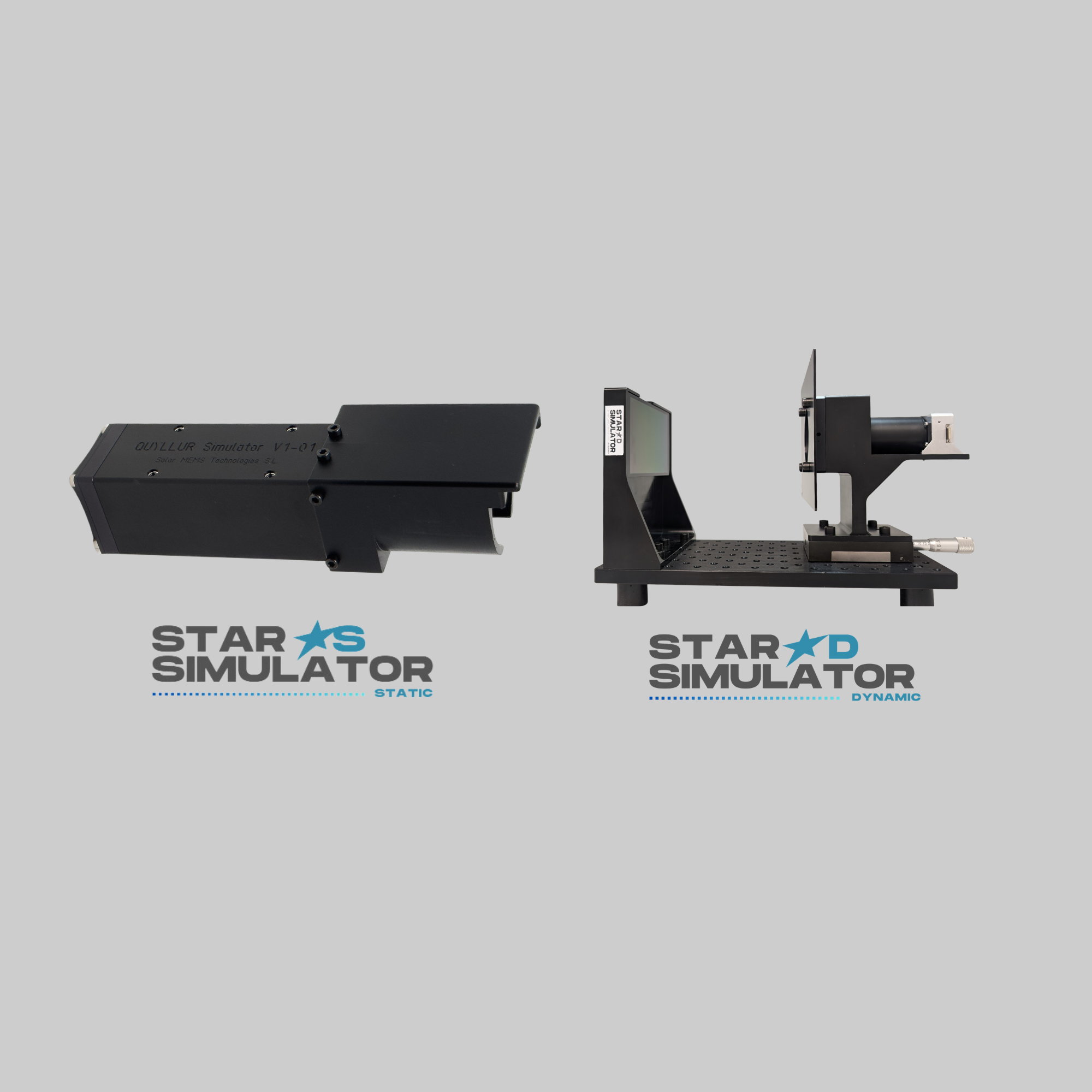
To address these challenges, Solar MEMS has developed two innovative Optical Ground Support Equipment (OGSE) solutions designed to simplify and enhance Star Tracker testing and validation activities:
- STAR-S Simulator – developed for high-precision Star Tracker testing in Thermal Vacuum (TVAC) environments.
- STAR-D Simulator – designed for realistic in-orbit performance simulation and dynamic star field testing.
Together, these systems provide spacecraft developers, integrators, and ADCS engineers with a flexible and cost-effective approach to validating next-generation navigation systems throughout the spacecraft development lifecycle.
STAR-S Simulator
High-Precision TVAC Validation for Star Trackers
Environmental testing is one of the most critical stages of spacecraft qualification. Systems must demonstrate reliable operation under the extreme thermal and vacuum conditions encountered in orbit, where even minor performance deviations can compromise mission success.
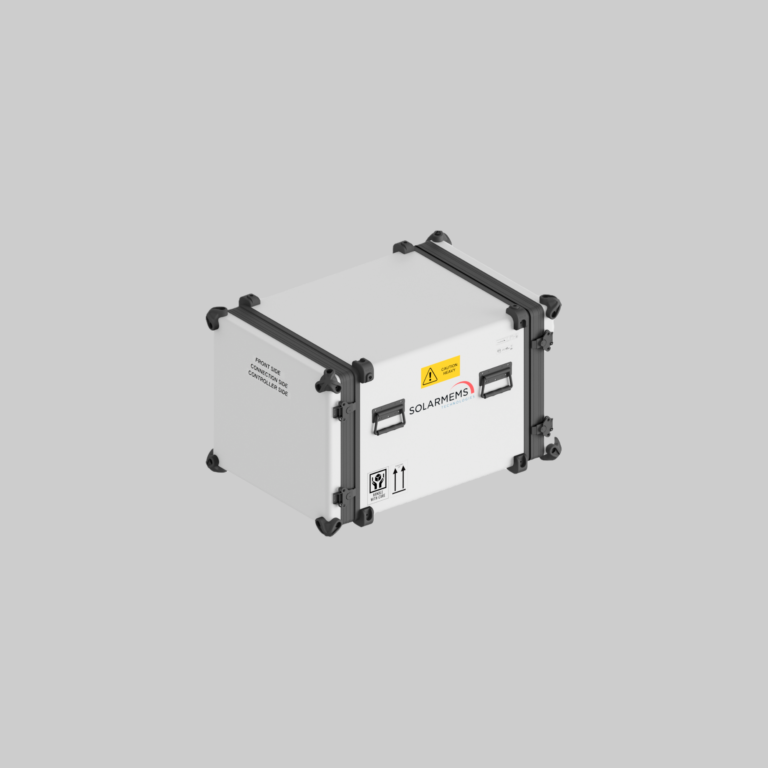
The STAR-S Simulator has been specifically developed to support this process by providing a compact, robust, and highly stable OGSE solution for Star Tracker validation inside Thermal Vacuum chambers.
This plug-and-play system uses highly controlled and stable LED light sources to reproduce realistic star patterns with exceptional repeatability. By accurately simulating celestial references during thermal cycling and vacuum testing, STAR-S enables engineers to evaluate sensor performance under realistic operational conditions before launch.
Its compact architecture allows easy integration into existing TVAC test environments, while its cost-effective design significantly reduces the complexity traditionally associated with optical testing setups.
Key Advantages of STAR-S
- Accurate simulation of real star patterns
- Designed specifically for TVAC environments
- Highly stable and controlled LED optical sources
- Compact and lightweight architecture
- Plug-and-play integration
- Reliable and repeatable test conditions
- Reduced setup complexity and operational costs
The ability to perform repeatable and stable validation campaigns is essential for spacecraft qualification. STAR-S helps streamline this process, allowing engineering teams to focus on performance analysis and system optimisation rather than complex test infrastructure management.
STAR-D Simulator
Dynamic In-Orbit Star Field Simulation
While environmental validation is essential, spacecraft developers must also verify how Star Trackers behave during real mission operations. This includes validating sensor performance under changing spacecraft attitudes, orbital trajectories, and dynamic celestial conditions.
The STAR-D Simulator addresses this requirement by enabling realistic in-orbit performance simulation through dynamic star field generation.
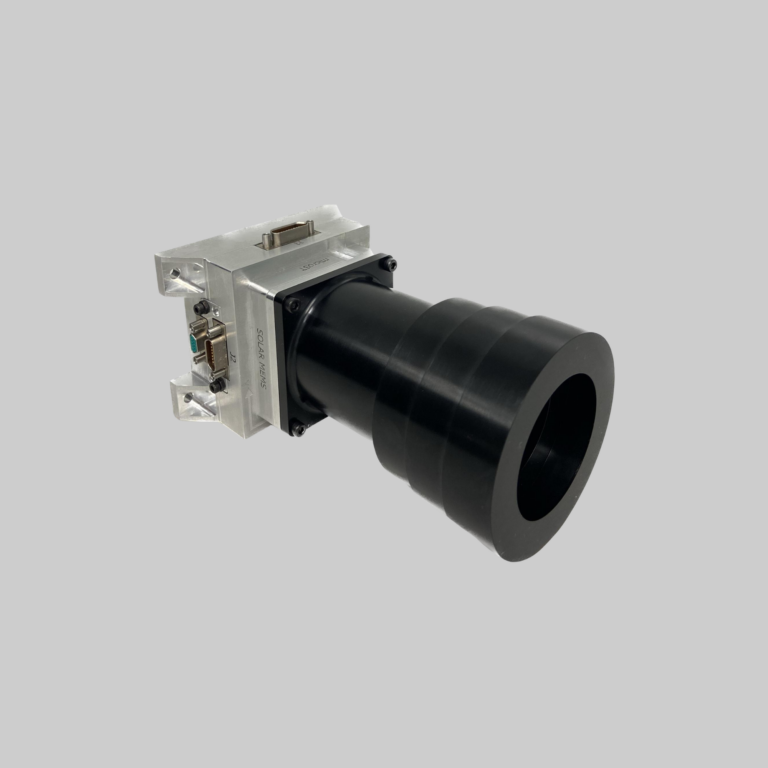
Unlike static optical simulation systems, STAR-D uses a high-performance display architecture capable of reproducing complete star fields and realistic satellite trajectories. This allows engineers to evaluate Star Tracker behaviour during complex operational scenarios, replicating the conditions encountered throughout a spacecraft mission.
Designed as a flexible and user-friendly OGSE platform, STAR-D can be adapted to virtually any type of Star Tracker, making it an ideal solution for spacecraft developers working across multiple mission profiles and satellite classes.
Key Advantages of the STAR-D
- Full star field simulation capabilities
- Realistic satellite trajectory emulation
- Dynamic operational scenario testing
- Adaptable to multiple Star Tracker architectures
- User-friendly PC interface
- Compact and cost-effective design
- Reduced integration and testing complexity
The STAR-D is particularly valuable during flat-sat integration and ADCS development stages, where rapid system iteration and validation are critical. By enabling realistic mission simulation before launch, the system helps reduce development risks and increases confidence in overall spacecraft navigation performance.
Supporting the Future of Autonomous Spacecraft
As the space industry moves towards increasingly autonomous systems and resilient navigation architectures, the demand for advanced validation tools continues to grow. Modern spacecraft are expected to operate with greater independence, higher precision, and increased reliability — all while reducing development timelines and program costs.
STAR-S and STAR-D were developed with these industry challenges in mind.
By combining precision optical simulation, user-friendly operation, and scalable architectures, both systems provide spacecraft manufacturers and integrators with practical tools capable of accelerating qualification activities while improving confidence in mission readiness.
These solutions not only reduce testing complexity but also help engineering teams optimise ADCS development workflows, improve performance verification, and streamline spacecraft integration campaigns.
A New Generation of Accessible OGSE Solutions
Traditionally, high-fidelity optical simulation environments have been associated with significant complexity, long integration timelines, and high operational costs. Solar MEMS aims to change that.
With STAR-S and STAR-D, spacecraft developers now have access to compact, reliable, and cost-effective OGSE platforms capable of supporting both environmental qualification and operational performance verification.
From TVAC validation to realistic in-orbit star field simulation, these systems represent a new generation of accessible testing technologies designed to support the rapidly evolving demands of the global space sector.
Interested in learning more about STAR-S and STAR-D simulators and how they can support your spacecraft development activities?
Get in touch with the Solar MEMS team to explore our latest optical simulation and navigation testing solutions.